Companion Planting: What the Science Actually Says (And What You Can Stop Worrying About)
The first time I sat down to plan my garden with companion planting in mind, I ended up more anxious than when I started.
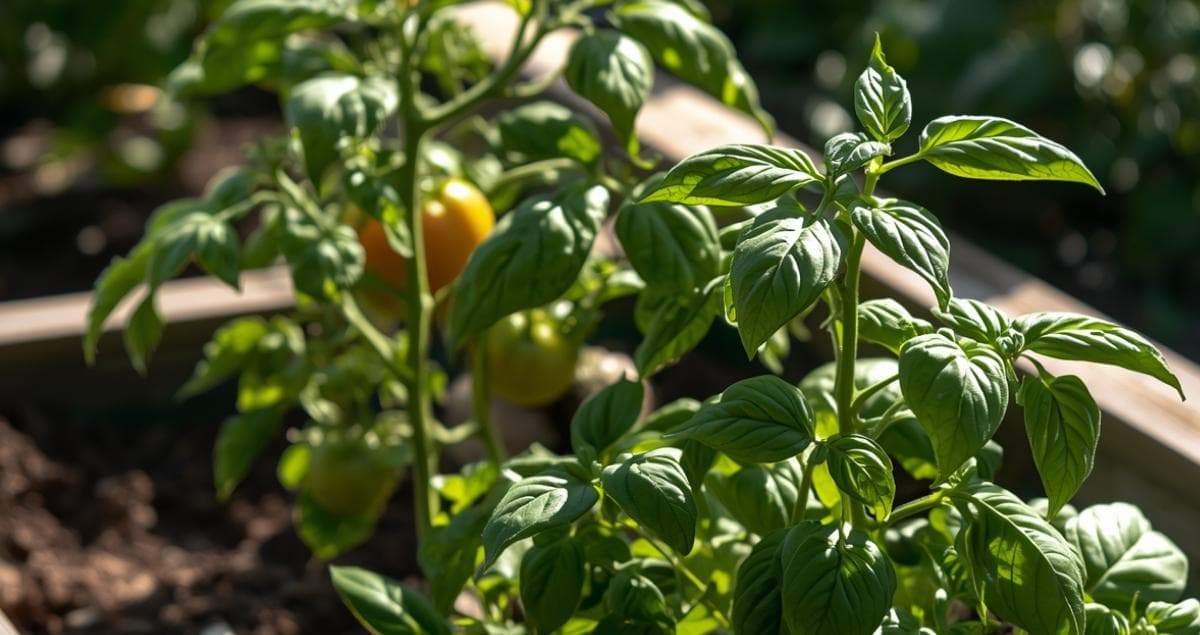
I had a chart open on my laptop, a seed catalog in my lap, and I was trying to figure out whether my tomatoes could go next to my peppers (fine, apparently), whether the basil would repel hornworms (the internet seemed confident), and whether I'd accidentally poisoned my chances of a good harvest by putting the wrong things next to each other.
It took the fun out of planning. I was treating my garden like a puzzle I could get wrong instead of something I was supposed to enjoy.
If you've ever felt that way, I want to tell you something that changed how I think about all of it: most companion planting lists have no scientific basis. The pairings were copied from books that copied them from other books, none of which tested whether any of it actually worked.
That doesn't mean companion planting is useless. It means we've been doing it wrong — memorizing charts instead of understanding mechanisms. And once you understand the mechanisms, the whole thing gets a lot simpler.
I put together a free companion planting quick reference guide based on what the research actually supports. I'll link it at the end of this post — it's the version of a companion planting chart I actually wished existed when I started.
The Chart I Couldn't Stop Second-Guessing
Here's the thing about those companion planting lists: they feel authoritative. They're organized into neat columns. "Friends" and "Enemies." Basil loves tomatoes. Fennel hates everyone. Carrots and tomatoes are apparently devoted companions.
The most popular book on the topic — Carrots Love Tomatoes, published in 1975 — has been reprinted dozens of times and sold millions of copies. A Washington State University Extension review found it contains no scientific evidence for its claims, and most combinations don't even have logical explanations for why they supposedly work. They just do, according to the author.
Those claims have been repeated millions of times since, across gardening websites, YouTube videos, and seed company blogs, until they have the weight of established fact.
I'm not saying none of it is true. I'm saying it hasn't been tested. There's a difference. And for those of us trying to make actual decisions about a real garden in a specific climate with limited space, that difference matters.
What the Science Does Say
There's good news here. Research on intercropping, polyculture, and plant interactions does exist — scientists just don't call it companion planting. They call it intercropping, integrated pest management, or habitat diversification. And some of what they've found is genuinely useful.
The most consistent finding across decades of research is also the simplest one: diversity works. A garden with many different kinds of plants is harder for pests to navigate than a monoculture. When a pest arrives looking for its preferred host, it has to spend more energy finding it when that host is surrounded by unrelated species. Some give up. Some move on.
You don't need a specific pairing for this to work. You just need variety. That finding alone should take a weight off. Stop asking "which plant goes next to which" and start asking "do I have enough different things growing?"
The specific combinations with the best research support all share something in common: there's a clear, logical mechanism behind them. Not "these plants love each other." A real reason.
There's a specific mechanism worth understanding here. Research has found it's not primarily the scent of nonhost plants that disrupts pest insects — it's the visual presence of green objects. Pests land on green surfaces and then use smell to verify whether it's their host plant. When they land on a nonhost and discover it's wrong, they have to keep searching, using up energy and time without feeding or reproducing. This means any nonhost plant — not just aromatic ones — provides this disruption simply by being there. It's one more reason why a diverse garden outperforms a monoculture, and why you don't need a specific companion planting strategy to see the benefit.
The Change That Actually Made a Difference in My Garden
I want to tell you about the cilantro I let bolt.
A few summers ago, I had a cilantro plant that had gone to flower before I got around to harvesting it. I left it because I wanted the seeds for ground coriander. Within a week or two, that bolted cilantro was covered in tiny insects I'd never paid much attention to before — parasitic wasps, hoverflies, things moving too fast to identify. And the plants around it seemed to attract them too.
I started doing that deliberately after that. Letting some of my herbs flower instead of cutting them back. Dill, cilantro, parsley. The flat-topped clusters of tiny flowers that the carrot family produces are, according to research, among the most effective plants for attracting beneficial insects in the garden. Parasitic wasps lay their eggs inside aphids and caterpillars. Hoverfly larvae eat aphids by the hundreds. They need nectar and pollen as adults. Those flowering herbs provide it.
I also planted marigolds that year, because everyone online was very confident about marigolds. My garden was more beautiful. It was genuinely more enjoyable to walk through. Did the marigolds repel pests? Honestly, I couldn't tell.
The research on marigolds is more complicated than most gardening content lets on. A 2023 peer-reviewed WSU Extension publication found that French marigolds can have a negative effect on certain pests, but they also discourage the pests' natural enemies and other beneficial insects. They don't distinguish between the insects you want and the ones you don't. Nematode suppression requires planting them densely and tilling them into the soil — not just tucking them around the garden.
I kept growing them anyway. Not because they're proven pest repellents — the evidence doesn't support that — but because I like them, they attract pollinators, and my garden is more pleasant to be in with them there. That's a legitimate reason. Just go in with accurate expectations.
The flowering herbs, though — those made a difference I could actually see. I've kept doing it ever since. A few plants allowed to bolt and flower throughout the season, scattered around the beds. It costs nothing. It requires no chart.
Research at the University of Sussex found that borage planted next to strawberries increased fruit yield by 35% — the mechanism being that borage dramatically increased pollinator visits to the strawberry flowers. That's the kind of specific, testable, real-world result that's worth paying attention to.
Sweet alyssum near lettuce and brassicas has peer-reviewed support for attracting hoverflies whose larvae feed on aphids. Phacelia — less well-known but worth growing — is one of the most effective early-season attractors of bees and beneficial insects you can plant.
The goal isn't a specific pair. It's keeping something in flower from early spring through fall. The particular plant matters less than the continuity.
Nitrogen Fixation: The Honest Version
You've probably heard that planting beans next to corn gives the corn free nitrogen. This is one of the most repeated claims in companion planting, and it's also one of the most misleading.
Nitrogen fixation by legumes is real. Beans, peas, clover, and vetch do form partnerships with soil bacteria that pull nitrogen from the air and store it in nodules on their roots. That nitrogen is genuinely valuable.
The problem is timing. While a legume is alive and actively growing, it keeps most of that nitrogen for itself. During the early weeks of growth, legumes may actually compete with neighboring plants for soil nitrogen before their own fixation gets going. The corn planted next to your beans this season is probably not getting meaningful nitrogen from them this season.
The nitrogen releases when the plant dies and breaks down. The roots decompose, the nodules open up, and the nitrogen becomes available to whatever grows in that space next.
This changes how you should think about using legumes. The strategy that actually works:
Grow legumes in a bed. At the end of the season, cut the plants at the base and leave the roots in the ground — that's where most of the nitrogen is. Leave the stems to decompose on the surface or till them in. Plant heavy feeders — tomatoes, corn, brassicas, squash — in that same bed next season.
That's rotation, not companion planting in the traditional sense. But it works, and the research supports it clearly.
For no-till gardeners, chop and drop is a workable version of this: cut legumes, chop into small pieces, leave everything on the soil surface, wait 2-4 weeks before planting. You get roughly 40% of the nitrogen benefit compared to tilling in. Still meaningful, just slower.
One more thing worth knowing: if you plant onions or garlic right next to your beans or peas, the root secretions from alliums appear to inhibit the nitrogen-fixing bacteria in legume nodules. Keep your allium bed separate from your legume bed.
Also worth noting: the yield of the legume itself can suffer if it isn't competitive with the other plants it's growing alongside. If you're growing legumes specifically for nitrogen benefit rather than harvest, give them enough space to establish properly.
Download the Free Companion Planting Quick Reference
What actually works, what to avoid, beneficial flowers, trap crops, and a simple checklist — based on peer-reviewed research, not garden myths.
We respect your inbox. Unsubscribe anytime.
Trap Cropping: The Strategy That Requires Effort but Actually Works
Trap cropping is the practice of planting something that pests prefer more than your main crop, then managing the pests on the trap crop so they don't reach your vegetables.
This one has real research behind it. It also requires more active management than most companion planting advice acknowledges.
My radishes and kale are a good example of how this works in practice. A few years ago I noticed my kale had almost no flea beetle damage while a nearby radish plant was covered with the little holes they leave behind. Accidental trap cropping. Now I plant radishes close to my kale deliberately throughout the season. The flea beetles go where they prefer, and my kale gets a break.
Radishes as a flea beetle trap crop is listed in Washington State University's integrated pest management materials. Nasturtiums serve a similar function for aphids — and for flea beetles too. Plant them at the perimeter of your garden, check them regularly, and when pest populations get high, remove the plant or the pests from it before they move on to your main crops.
Blue Hubbard squash is one of the most reliably documented trap crops in research — it attracts cucumber beetles, squash vine borers, and squash bugs so reliably that many growers plant it at the garden edge early in the season and stagger new plantings throughout summer to keep fresh growth available. Research found squash bugs preferred to stay on the Hubbard rather than moving to other squash, which means the stagger-planting approach can work without any additional intervention.
The honest caveat: trap cropping reduces pest pressure but doesn't eliminate it. If you plant a trap crop and walk away, the pests will eventually move to your main crop anyway — especially once the trap crop is overwhelmed or dies back. Check your trap crops. Act when you see high populations.
What to Actually Avoid
There's a short list of plant relationships with real field evidence behind them — where the science holds up outside of laboratory conditions.
Fennel near anything in your vegetable garden. Fennel is broadly allelopathic — it releases compounds through its roots that inhibit the growth of most vegetables and herbs. Keep it in its own dedicated container. Fennel in a pot is completely fine; the compounds stay in the root zone.
Sunflowers inside vegetable beds. Sunflowers release allelopathic compounds from their roots and hulls that can inhibit germination and stunt growth of nearby plants including tomatoes, beans, and corn. Plant them at the perimeter where they do the job they're actually good at — attracting pollinators and beneficial insects — without affecting your crops. Don't use sunflower hull mulch around vegetable beds.
Alliums next to legumes. As mentioned above — the root secretions interfere with nitrogen-fixing bacteria. Not catastrophic, but why undermine the one thing legumes are genuinely doing for you?
Tomatoes and potatoes in the same bed. This isn't allelopathy — it's disease dynamics. Both are nightshade family members, both are susceptible to early and late blight, and planting them together concentrates susceptible plants in one area where disease can spread rapidly between them. Keep them in separate beds and rotate both each year.
Plants within 50-80 feet of a black walnut tree. Juglone, the compound black walnut releases, is one of the most consistently documented allelopathic agents in horticulture. Tomatoes, peppers, apples, and blueberries are particularly sensitive. If you're siting a new garden and there's a black walnut nearby, this is worth knowing before you dig.
What You Can Stop Worrying About
This is the section I wish existed when I was stressing over my garden plan.
Basil repelling pests from your tomatoes outdoors. Some greenhouse studies show basil's volatile compounds affect insect behavior around tomatoes. In an open garden, field research has not supported this for basil or any other aromatic species — VOCs dissipate too quickly outdoors to reach concentrations that affect insect behavior. Plant basil with your tomatoes because you like having fresh basil nearby. That's enough reason.
Beans giving your corn nitrogen this season. The timing doesn't work. See the nitrogen section above.
Marigolds as a pest management strategy. French marigolds can suppress certain soil nematodes when planted densely and tilled in — not just placed around the garden. But a peer-reviewed WSU publication found they also discourage beneficial insects and natural enemies alongside any pest effects. They don't distinguish between the two. Grow them because they're beautiful and because they attract pollinators. Don't rely on them for pest control.
The Three Sisters giving each other nitrogen during the growing season. The physical relationships in Three Sisters are real — corn supports beans, squash shades the soil. The in-season nitrogen transfer from beans to corn is much weaker than tradition suggests.
Most "don't plant this with that because they compete for nutrients" advice. Nutrient competition between plants is real, but the specific pairings are almost entirely untested at home garden scale. What actually helps is improving your soil broadly and pairing plants with different root depths where you can. Deep-rooted plants like tomatoes and carrots draw from lower soil layers while shallow-rooted plants like lettuce and herbs feed from the top few inches. Less overlap, less competition. No chart required.
Where This Leaves You
Companion planting done well isn't about memorizing which plant loves which other plant. It's about understanding a few mechanisms and building a garden that works with them.
Keep flowers blooming throughout the season to support beneficial insects. Rotate legumes through your beds so the following year's heavy feeders get the nitrogen benefit. Try a trap crop if you have a persistent pest problem, and actually manage it. Keep fennel in a pot. Put sunflowers at the perimeter.
That's the list. It's shorter than any chart I've ever seen, and the research behind it is actually solid.
I track my plant placement in Giddy Carrot specifically because I want to observe these things over time in my own garden. What worked, what didn't, what bed had the best pest pressure and what was growing nearby. Your garden is specific to your climate, your soil, and your local insect population. No study conducted on a farm in Iowa tells you exactly what will happen in your Colorado raised beds or your Georgia backyard. The only way to know is to pay attention season after season.
Get the Companion Planting Quick Reference
I distilled everything in this post — what works, what to skip, and what to actually watch out for — into a free one-page companion planting quick reference. It's the version of a companion planting chart I wished existed when I started: built around mechanisms, honest about the evidence, and short enough to actually be useful.
Download the Free Companion Planting Quick Reference
What actually works, what to avoid, beneficial flowers, trap crops, and a simple checklist — based on peer-reviewed research, not garden myths.
We respect your inbox. Unsubscribe anytime.
Sources: Chalker-Scott, L. (2023). Gardening with Companion Plants. WSU Extension Publication EM128E (peer-reviewed); Griffiths-Lee et al. (2020), Ecological Entomology (borage/strawberry yield study); UMN Extension, Companion Planting in Home Gardens; Shelton & Badenes-Perez (2006), Annual Review of Entomology (trap cropping review); Walliser, J., Plant Partners: Science-Based Companion Planting Strategies for the Vegetable Garden.
Related Articles
Why Your Vegetable Varieties Matter More Than You Think
Choosing the wrong tomato variety cost me two seasons of early disease. One onion mistake meant no bulbs — ever. Here's what I learned about matching varieties to your climate.
No-Till Gardening: What It Actually Looks Like
No-till gardening is simpler than you think. Learn how to improve soil health, reduce weeds, and save time by minimizing soil disruption in your vegetable garden.
How to Plan a Productive Vegetable Garden (Step-by-Step)
Learn how to plan a vegetable garden that produces continuous harvests all season. Step-by-step guide covering layout, succession planting, and making the most of your space.